July 24, 2010

Fantasy Pictures

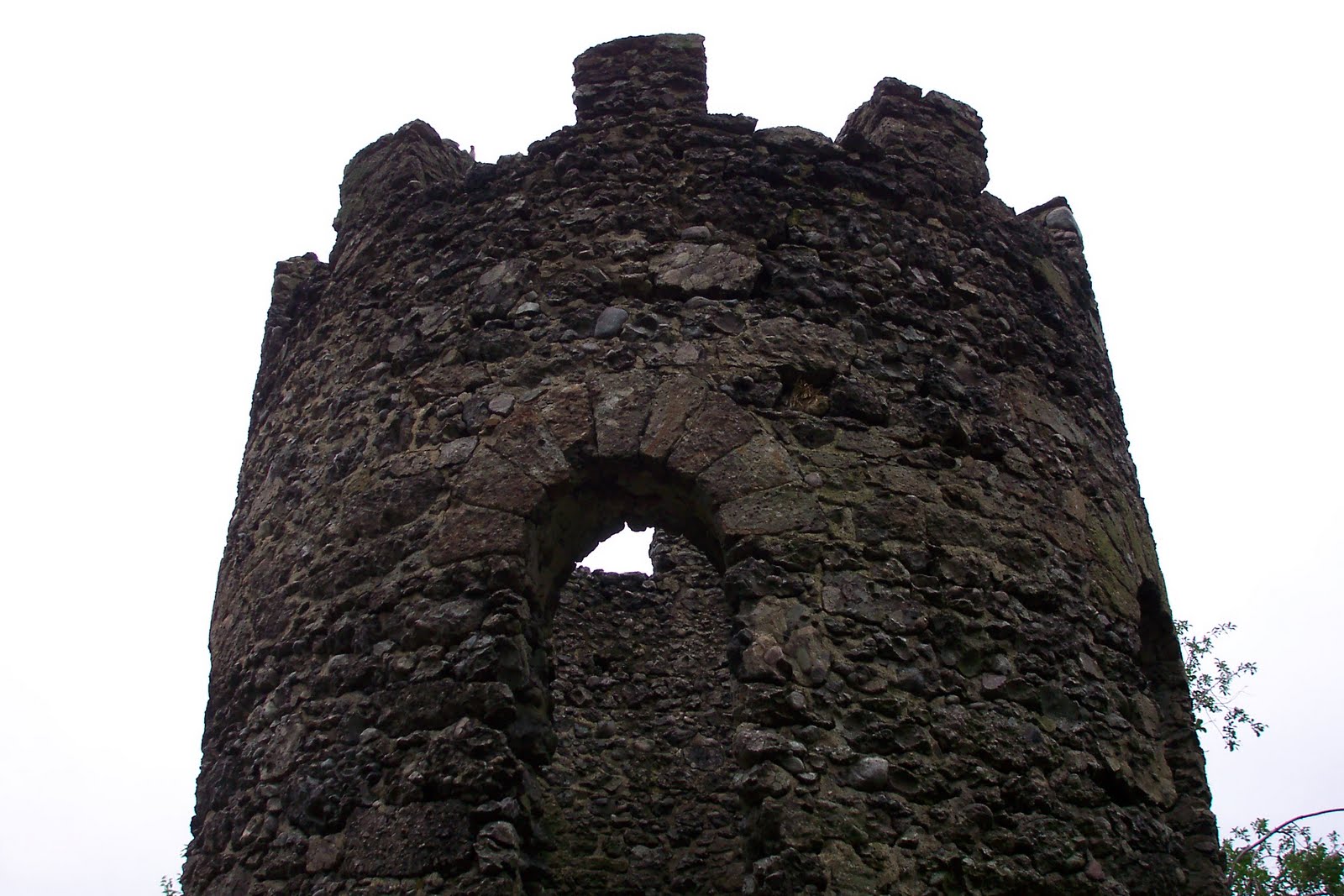
Here are some pictures that would make some nice locations in an adventure. Taken in the Franklin Zoo in Boston, MA.


July 13, 2010

GM Background

A part of character generation in many systems is the character background; the jobs and livelihood the character had before he became an adventurer. What did your character do before he became an adventurer? The same question could be asked about a GM. What did you do before you became a GM or rather what do you do when you are not a GM? And more importantly, how does what you do in your job affect how you GM?

I have seen various blogs discuss how being a teacher changes how they run a game. Parents have also chimed in with how they bring in some of their skills they have learned as a parent into the game setting. People are of diverse backgrounds and that includes a GM. What skills from their non-game life do they apply to the art of being a GM?

For myself, I utilize two aspects. I have long been involved in computer programming and logic thinking. This has allowed me to dissect an encounter to its key components and push the best of those components to the forefront. I like to think I can write an interesting, challenging and fun encounter. I can look at a game system and make the best use of its mechanics. As a downside my “fluff” is severely lacking. I tend to utilize mechanics over fluff to my game’s detriment.

A second aspect is my involvement in LARPS (live-action-role-play). Again this has given me a ready field to write encounters and have them tested out (and vise versa). I can get a quick reaction to an encounter I have written. It also helps me to keep things fast paced and interactive. It’s all about the players on the field at the time. The NPCs are there to interact with the players and not other NPCs. Entertaining the players is the most important part of running a LARP and the same applies to your tabletop game. I also use a lot of props at my table since I use a lot of props at a live action game.

So, I ask you, what non-game skills do you bring to the table when you GM? What is your background and how has it affected how you run a game?

July 9, 2010

New Timelords for the Doctor Who RPG

The new Doctor Who RPG game. I have always loved Doctor Who, and even liked the old FASA version of their game. More for the fact they worked hard to recreate the Doctor Who setting, rather than any sterling rule set. The new rule system is by canon set in the current (relatively speaking when it comes to a time travel game) series. The game makes mention of the earlier series, but is firmly set in the most recent episodes.

This becomes problematic when a player wants to play a Timelord other than the Doctor. Personally I do not like playing established characters. For me, half the fun of an RPG is creating the character and then seeing where it takes you. A lot of other people feel the same way. However, the problem that arises is that according to canon the current Doctor is the last of the Timelords. This has been proven wrong on at least one occasion, when the Master made an appearance.

So the question is, is there a way to play a Timelord while still retaining the canon of the current series?

[More]

July 6, 2010

4E and Hero Points

Hero Points is what I am calling any of those systems wherein a character can do a little bit more; where they can manipulate a game system to go beyond what the system normally allows. This is often manifested as extra attacks, extra damage, extra healing or, most often, a way to save a character from death.

Hero Points have been around for awhile now in various game systems. The new Doctor Who game has Story Points. Mutants & Masterminds has Hero Points. Dark Heresy has Fate Points. Serenity and the Cortex System use Plot Points. Shadowrun uses the Karma Pool.

Hero Points are in place to allow for characters to go beyond their normal capabilities. When they are in a really nasty fight they can throw the fight into their favor. It also is a way to mitigate bad die rolls; having a player lose a character due to bad die rolls can be unfun.

So, the question is…Does 4E D&D want or need a Hero Point mechanic?
I say there is already a Hero point system in place for 4E and it is the Action Point. Think about it, Action Points allow a character to go beyond the normal scope of the game system.

A recent example in my game: The fighter found herself in some serious trouble at the beginning of the fight. A magical effect was drawing the characters to the center of the room where they would then take a lot of damage and four minions would appear as well. She was the first to discover this mechanic and took a lot of damage right off the bat. She also was standing at the exact spot where the four minions suddenly appeared next to her. She was looking at taking a dirt nap on her next action. She immediately popped something that let her regenerate herself on her next action.
If she stayed put the magical effect would pull her in again and the damage would have dropped her. If she did a move to get away, the minions would have been enough to drop her. However, she could not move away without getting several Opportunity Attacks which would have dropped her as well. A simple shift was not enough to get her far enough away. Instead she used a shift, then popped an Action Point, then used the extra action as a move and moved safely far enough away to be out of range of the pull-in effect.

And that is the part of the Action Point system that I like over more “traditional” Hero Points. In effect she used a Hero Point to “get the heck out of there and save her butt”. However, instead of a vague system mechanic wherein “she gets lucky and gets away” the player used an ability she always had. Action points allow the player to change the landscape of an encounter while still remaining within the character’s capabilities and abilities.

There is no need to add additinal effects into an Action Point. There are already a myriad of different actions a player can take when they expend an Action Point. They can use it to gain extra attacks or do more damage (by using their extra action to use an attack ability). They can use it to save their character’s life (by using a second wind or an ability that heals themselves, or by simply moving out of a dangerous positioning). They can do all the things a Hero Point can do in other games, but they do it without stepping outside of their normal abilities.

July 2, 2010

Don’t Keep Too Many Secrets

As DMs our worlds are full of secrets. Our NPC villains have secret plans they are hiding from the characters. There are mysterious places in the world the characters know nothing about. That beggar is more than he seems. The gods have agendas the characters can not fathom. Having a world with secrets is a good thing; it keeps the players guessing and gives them something to try and figure out.

However, sometimes we can fall into the trap of not letting enough information out. We want to keep things close and “save it for later”. We fear if we reveal all now, there will be nothing to reveal later….and then we end up never revealing anything.

To keep the interest in the campaign we need to reveal bits and pieces. If we present the players with mysteries and then do not reveal the answers, the players may begin to feel detached from the world; like outsiders looking at a picture instead of active participants.

Recently I made an error on game night. In my 4E sandbox I have sprinkled all sorts of mysteries around the world for the players to find. They found one; a table with chairs with a complete dinning set…in the middle of a forest all by itself. The characters tried to figure out what it was and eventually left it. I ended up giving them absolutely no information. In hindsight I should have allowed them a Nature roll (at my prompting for the roll) wherein I could have revealed “You get a vague sense of the Feywild here, but can not make any more sense of what the table is doing here”. This would have allowed them to feel in touch with the mystery. They may have not gained anymore information, but it would have given them a basis to start forming their own conclusions. The encounter would go from “that weird table thing” to “that possible gateway to the Fey”.

I have another Fey encounter written for the players to find later. It would tie wonderfully in with the table, but now the players will not know about any possible connection between the two. This was a failing on my part. The players never investigated enough, but there is no reason why I could not have asked for the Nature roll.

The trick with keeping secrets is that you need to let some out. The perfect version is that for every secret you reveal there is another mystery or question that the characters now have. However, eventually you want to reveal all the secrets. The important thing to remember is that secrets are meant to be revealed. What good are they if you are the only one who ever knows them?